 Image 1 of 3
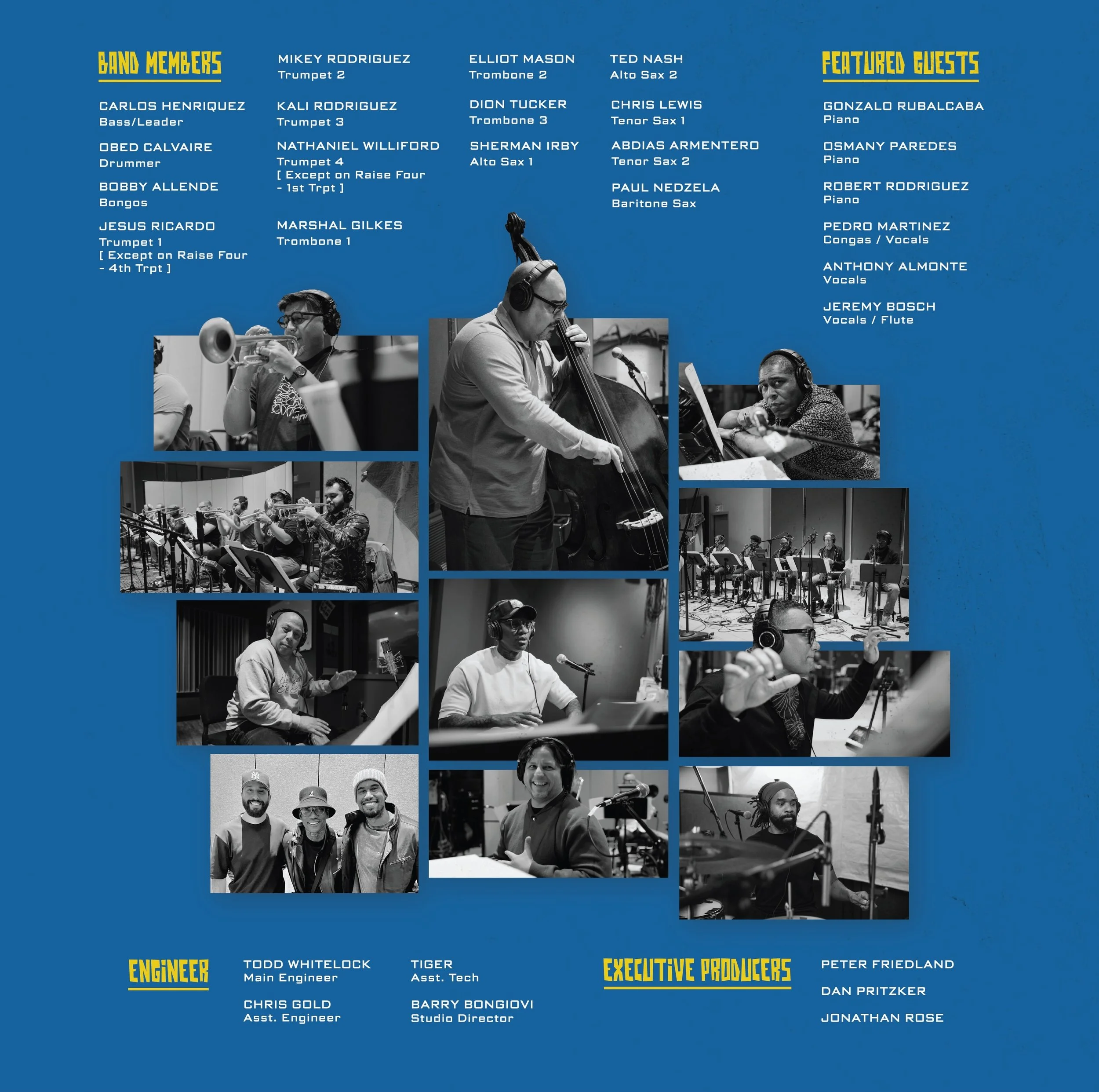 Image 2 of 3
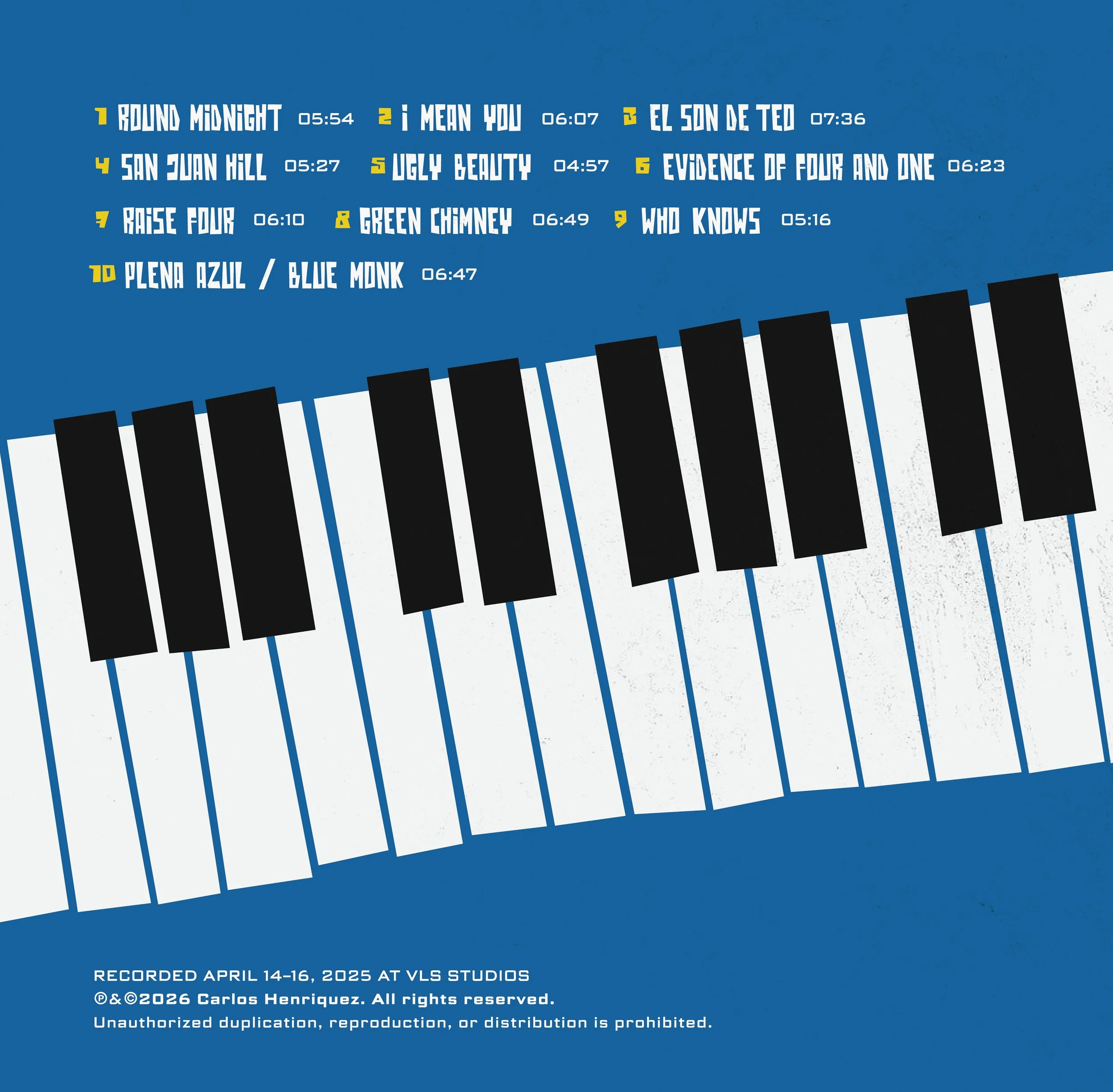 Image 3 of 3
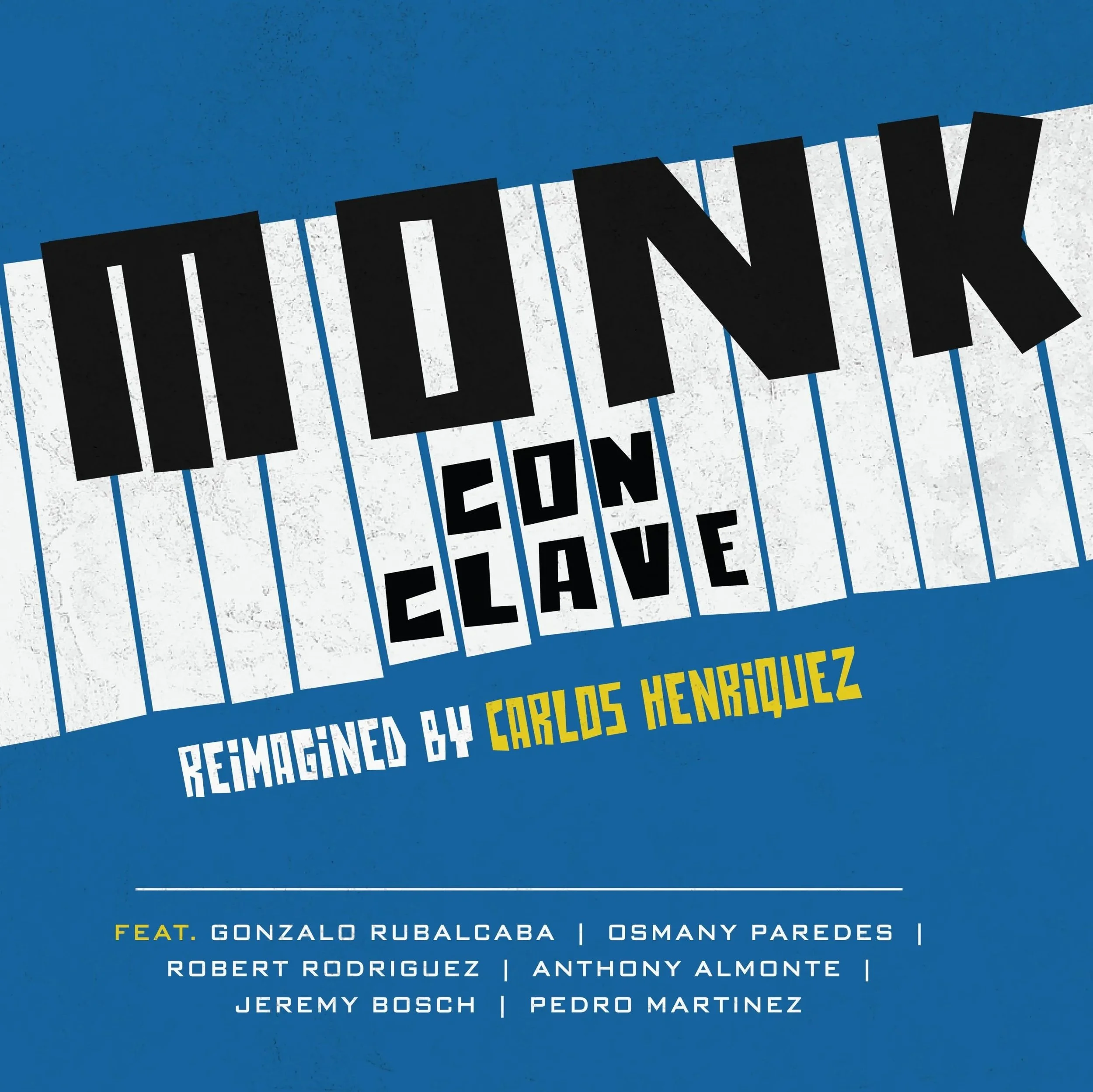
Monk Con Clave [cd ]
Monk con Clave is the forthcoming album from the Carlos Henriquez Big Band, arriving independently on April 17. Therein, bassist and bandleader Carlos Henriquez roots the large-ensemble recording in his long relationship with the work of Thelonious Monk and the cultural history of San Juan Hill.
He brings together a multigenerational band drawn from members of the Jazz at Lincoln Center Orchestra and its extended community, including percussionist Pedrito Martínez, trumpeter Mike Rodriguez, pianists Gonzalo Rubalcaba, Osmany Paredes, and Robert Rodriguez, vocalist Anthony Almonte, flutist and vocalist Jeremy Bosch. The project places Monk’s compositions beside original works shaped by Bronx memory and Nuyorican identity.
Few figures in modern art carry the singular presence of Thelonious Monk. His unmistakable melodic contours, harmonic tensions, and rhythmic logic continue to define the jazz repertoire, with musicians reinterpreting his work across generations. Monk lived in Manhattan’s San Juan Hill neighborhood before its disappearance during the construction of Lincoln Center, and his sound still carries the imprint of that vanished New York community.
Henriquez’s work as a bassist, composer, and bandleader has drawn sustained critical recognition across the jazz world. JazzTimes has praised his playing as “clean, crisp and to-the-point…jet fuel for the Jazz at Lincoln Center Orchestra,” while noting that “anyone surprised by the depth and breadth of Henriquez’s talents simply hasn’t been paying attention.” DownBeat has described him as “an emerging master in the Latin jazz idiom,” and WRTI has called his Grammy-nominated album The South Bronx Story “a terrific album,” highlighting his rare ability to unite Afro-Latin clave and jazz swing with few peers.
Henriquez built his artistic life through decades at Jazz at Lincoln Center. He joined the organization in the late 1990s as a teenager performing with Wynton Marsalis, became a full-time orchestra member, and spent years touring, recording, arranging, curating, and directing performances. “It’s almost like a mini Wynton Marsalis throughout those 30 years,” he says. “My participation there has been basically my whole life. It’s my home and a place where I’m gonna continue to develop and to lead.”
Monk’s voice has remained central to that life. “Something stood out,” Henriquez says. “It made me feel comfortable. It made me feel like I also had a voice in this music.” He hears Monk’s rhythmic language through his own identity as “a Nuyorican — somebody born in New York City whose parents are from Puerto Rico.” The music on Monk con Clave grew from that connection because he “was already listening to his music and very attracted to his uniqueness and him being himself.”
Henriquez assembled the band for what he calls “a great moment for me, especially for this project.” The session carried humor and familiarity. “Everybody’s on point. If you mess up a note, everybody starts jumping on you. That’s the fun part… all the talking amongst friends to keep our spirits and our attention span as high as possible.” During one solo, Rubalcaba stunned the room so completely that the musicians looked around “like they saw a ghost, like they saw an alien.”
The album opens with “Round Midnight,” where, Henriquez says, Rubalcaba’s playing “becomes water and takes the shape of whatever he wants to do.” “I Mean You” captures what Henriquez calls “the vibe of Afro-Cuban music at its best.”
“El Son De Teo” unfolds through a slow Son atmosphere connecting the homage to Teo Macero, creating “a real Son vibe.” His original composition “San Juan Hill” reflects “the ups and downs of being Black American and Puerto Rican Latino during the transition period, with Robert Moses having to move people out of their locations.” On “Ugly Beauty,” Henriquez shifts Monk’s triple meter into four and draws on the ballad language of Beny Moré, while a vocal performance by Anthony Almonte delivers what he describes as “luscious sounds.”
“Evidence of Four and One” references Monk’s classic compositions “Evidence,” first recorded in 1948, and “Four in One,” a formally unusual work from 1951. Here Henriquez manages to combine both tunes as if it were one. Built on rapid sixteenth-note with both melodic lines overlapping. “Raise Four” follows the lineage of Machito and Chico O’Farrill through a six-eight pulse and the explosion of Pedro Martinez & Jesus Ricardo.
“Green Chimneys” carries a Mozambique feel that features piccolo flute and bass on the melody. “Who Knows” stands as “a reflection of people I look up to — Tito Puente, Machito, Chico O’Farrill — Afro-Cuban and Afro-Puerto Rican.” The closing “Plena Azul Blue Monk” draws on Puerto Rican plena tradition, where “the trombone just playing the melody” evokes figures such as Papa Vázquez, William Cepeda, and Rafael Hernández.
For Henriquez, the music returns to the place that shaped him.
Tracklisting
Round Midnight
I Mean You
El Son De Teo
San Juan Hill
Ugly Beauty
Evidence of Four and One
Raise Four
Green Chimney
Who Knows 10.
Plena Azul Blue Monk
Monk con Clave is the forthcoming album from the Carlos Henriquez Big Band, arriving independently on April 17. Therein, bassist and bandleader Carlos Henriquez roots the large-ensemble recording in his long relationship with the work of Thelonious Monk and the cultural history of San Juan Hill.
He brings together a multigenerational band drawn from members of the Jazz at Lincoln Center Orchestra and its extended community, including percussionist Pedrito Martínez, trumpeter Mike Rodriguez, pianists Gonzalo Rubalcaba, Osmany Paredes, and Robert Rodriguez, vocalist Anthony Almonte, flutist and vocalist Jeremy Bosch. The project places Monk’s compositions beside original works shaped by Bronx memory and Nuyorican identity.
Few figures in modern art carry the singular presence of Thelonious Monk. His unmistakable melodic contours, harmonic tensions, and rhythmic logic continue to define the jazz repertoire, with musicians reinterpreting his work across generations. Monk lived in Manhattan’s San Juan Hill neighborhood before its disappearance during the construction of Lincoln Center, and his sound still carries the imprint of that vanished New York community.
Henriquez’s work as a bassist, composer, and bandleader has drawn sustained critical recognition across the jazz world. JazzTimes has praised his playing as “clean, crisp and to-the-point…jet fuel for the Jazz at Lincoln Center Orchestra,” while noting that “anyone surprised by the depth and breadth of Henriquez’s talents simply hasn’t been paying attention.” DownBeat has described him as “an emerging master in the Latin jazz idiom,” and WRTI has called his Grammy-nominated album The South Bronx Story “a terrific album,” highlighting his rare ability to unite Afro-Latin clave and jazz swing with few peers.
Henriquez built his artistic life through decades at Jazz at Lincoln Center. He joined the organization in the late 1990s as a teenager performing with Wynton Marsalis, became a full-time orchestra member, and spent years touring, recording, arranging, curating, and directing performances. “It’s almost like a mini Wynton Marsalis throughout those 30 years,” he says. “My participation there has been basically my whole life. It’s my home and a place where I’m gonna continue to develop and to lead.”
Monk’s voice has remained central to that life. “Something stood out,” Henriquez says. “It made me feel comfortable. It made me feel like I also had a voice in this music.” He hears Monk’s rhythmic language through his own identity as “a Nuyorican — somebody born in New York City whose parents are from Puerto Rico.” The music on Monk con Clave grew from that connection because he “was already listening to his music and very attracted to his uniqueness and him being himself.”
Henriquez assembled the band for what he calls “a great moment for me, especially for this project.” The session carried humor and familiarity. “Everybody’s on point. If you mess up a note, everybody starts jumping on you. That’s the fun part… all the talking amongst friends to keep our spirits and our attention span as high as possible.” During one solo, Rubalcaba stunned the room so completely that the musicians looked around “like they saw a ghost, like they saw an alien.”
The album opens with “Round Midnight,” where, Henriquez says, Rubalcaba’s playing “becomes water and takes the shape of whatever he wants to do.” “I Mean You” captures what Henriquez calls “the vibe of Afro-Cuban music at its best.”
“El Son De Teo” unfolds through a slow Son atmosphere connecting the homage to Teo Macero, creating “a real Son vibe.” His original composition “San Juan Hill” reflects “the ups and downs of being Black American and Puerto Rican Latino during the transition period, with Robert Moses having to move people out of their locations.” On “Ugly Beauty,” Henriquez shifts Monk’s triple meter into four and draws on the ballad language of Beny Moré, while a vocal performance by Anthony Almonte delivers what he describes as “luscious sounds.”
“Evidence of Four and One” references Monk’s classic compositions “Evidence,” first recorded in 1948, and “Four in One,” a formally unusual work from 1951. Here Henriquez manages to combine both tunes as if it were one. Built on rapid sixteenth-note with both melodic lines overlapping. “Raise Four” follows the lineage of Machito and Chico O’Farrill through a six-eight pulse and the explosion of Pedro Martinez & Jesus Ricardo.
“Green Chimneys” carries a Mozambique feel that features piccolo flute and bass on the melody. “Who Knows” stands as “a reflection of people I look up to — Tito Puente, Machito, Chico O’Farrill — Afro-Cuban and Afro-Puerto Rican.” The closing “Plena Azul Blue Monk” draws on Puerto Rican plena tradition, where “the trombone just playing the melody” evokes figures such as Papa Vázquez, William Cepeda, and Rafael Hernández.
For Henriquez, the music returns to the place that shaped him.
Tracklisting
Round Midnight
I Mean You
El Son De Teo
San Juan Hill
Ugly Beauty
Evidence of Four and One
Raise Four
Green Chimney
Who Knows 10.
Plena Azul Blue Monk